A conservatory should be more than a room you occasionally walk through.
With the right design, layout and roof solution, it can become one of the most useful spaces in your home. It can be a calm reading room, a bright dining area, a family snug, a home office, a playroom, a garden room or a relaxed space for entertaining.
But many conservatories never quite reach their potential.
The room may be too hot in summer, too cold in winter, difficult to furnish or disconnected from the rest of the house. Some homeowners add furniture and hope the room will work, but without a clear layout, the space can feel awkward, cluttered or unfinished.
That is where zoning comes in.
Zoning is the process of dividing a room into clear areas for different uses. In a conservatory, it can help you make better use of the space, improve flow and create a room that feels designed rather than simply filled with furniture.
In this guide, we explain how to design a modern conservatory, how to zone the space properly and how CI Group roof systems including SkyTherm®, ThermaTile® and the CHRIS® System can help make your conservatory more comfortable for year-round use.
Why modern conservatory design starts with purpose
Before choosing furniture, colours or accessories, ask yourself one simple question:
What do we want this conservatory to do?
A conservatory often becomes underused because it does not have a clear purpose. It may contain a spare chair, an old table, a few plants and some furniture that has been moved out of another room. The result is a space that technically exists, but does not truly function.
Modern conservatory design works best when the room has a clear role.
Your conservatory could become:
- A relaxed living room.
- A dining space.
- A home office.
- A playroom.
- A reading room.
- A hobby space.
- A garden room.
- A breakfast area.
- A quiet retreat.
- A flexible family space.
Once you know how you want to use the room, it becomes much easier to choose the best layout, furniture and design details.
What is zoning in a conservatory?
Zoning means creating distinct areas within one room.
In a conservatory, zoning can be especially useful because the space is often open, bright and surrounded by windows. Without zones, it can feel like a pass-through area rather than a proper room.
Zoning helps you decide:
- Where people will sit.
- Where the main walkway should be.
- Where storage should go.
- Where the best view is.
- How the room connects to the garden.
- How the room connects to the house.
- Which areas are for relaxing, working, dining or playing.
It does not mean adding walls. In most conservatories, zoning is created through furniture placement, rugs, lighting, plants, storage, colour, flooring and the way the room is used.
The aim is to make the conservatory feel intentional.
The benefits of zoning a conservatory
Zoning can make a conservatory feel more modern, practical and comfortable.
The key benefits include:
- Better use of available space.
- A clearer room layout.
- Less clutter.
- Improved flow between house and garden.
- More flexible day-to-day use.
- A stronger sense of purpose.
- A more finished interior design scheme.
- Better separation between activities.
- A room that feels more like part of the home.
For example, a large conservatory might have a relaxed seating zone near the garden doors, a small desk zone against a side wall and a storage zone for blankets, books or children’s toys.
A smaller conservatory might only need one clear zone, such as a reading corner or compact dining area. Even then, the layout should still feel deliberate.
How to use a conservatory as a living space
One of the most common questions homeowners ask is: how do you use a conservatory as a living space?
The answer is to design it like a proper room, not an afterthought.
That means thinking about comfort, layout, lighting, temperature, storage and how the room connects to the rest of the home.
To make a conservatory feel like a living space:
- Choose comfortable furniture, not just occasional seating.
- Add soft furnishings such as rugs, cushions and throws.
- Use lamps or wall lights for evening warmth.
- Keep walkways clear.
- Create a focal point, such as a garden view or coffee table.
- Add storage to reduce clutter.
- Use colours that connect with adjoining rooms.
- Make sure the roof and temperature performance support everyday use.
- The final point is important.
A conservatory can be beautifully designed, but if it is still too hot in summer and too cold in winter, it will remain difficult to use. Good interior design improves the look of the room. A professional roof upgrade can improve how the room feels.
Best layout for a conservatory
The best conservatory layout depends on the size, shape and purpose of the room.
Here are some common layout ideas.
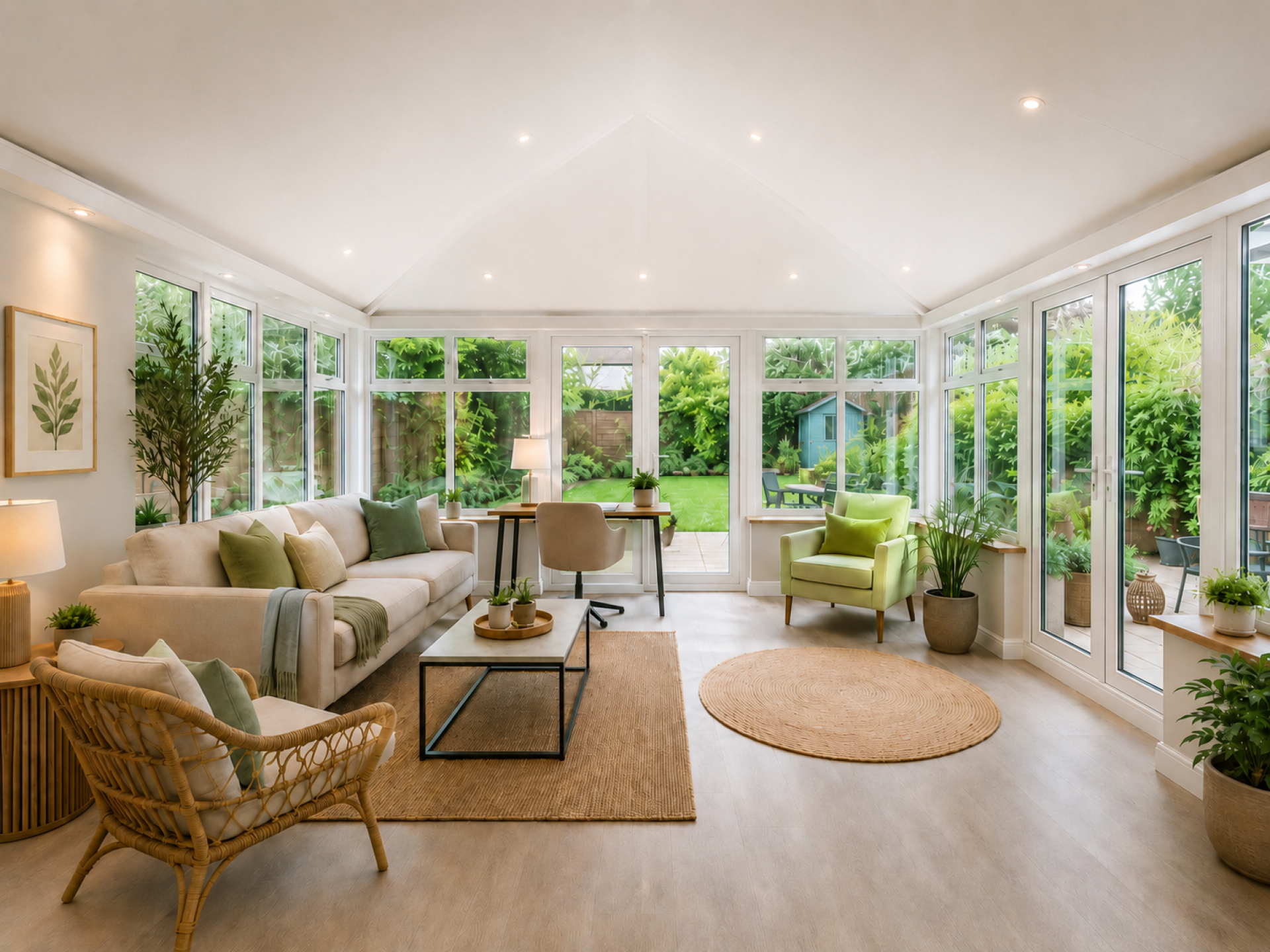
1 - The garden-facing lounge layout
This is one of the best conservatory layouts for homeowners who want a calm, comfortable sitting room.
Place a sofa or two armchairs facing the garden, with a coffee table or side table within easy reach. Add a rug to define the seating area and use plants to soften the edges of the room.
Best for:
- Relaxing.
- Reading.
- Morning coffee.
- Garden views.
- Year-round conservatory use.
This layout works especially well when the conservatory has an upgraded internal roof finish, as it helps the room feel more like a proper living room.
2 - The dining conservatory layout
A conservatory can make a beautiful dining space, especially if it connects to the kitchen or garden.
Place the dining table centrally, leaving enough room to move around the chairs. Use lightweight dining furniture where possible, especially in smaller spaces. Add pendant-style lighting only if suitable for the ceiling structure, or use wall lights and lamps to create atmosphere.
Best for:
- Family meals.
- Entertaining.
- Sunday lunch.
- Garden-facing dining.
- Kitchen-adjacent conservatories.
If the room overheats in summer or feels cold in winter, upgrading the roof can make a dining conservatory much more practical.
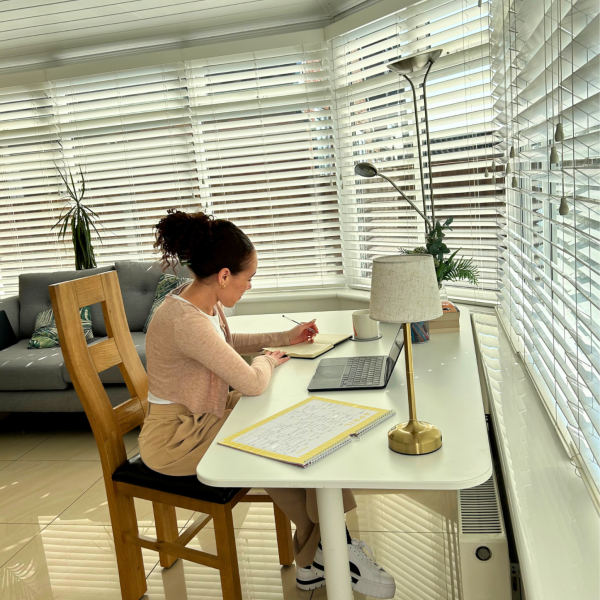
3 - The home office conservatory layout
A conservatory can work well as a home office if it is designed carefully.
Position the desk to avoid direct glare on your screen. Use blinds where needed, add task lighting and make sure there is enough storage to keep paperwork and equipment tidy.
Best for:
- Remote working.
- Admin.
- Creative work.
- Garden views.
- Quiet daytime use.
However, a home office needs reliable comfort. If the room is too hot, too cold or noisy when it rains, it may not be suitable for working until the roof performance has been improved.
4 - The family snug layout
A conservatory can become a relaxed family snug with the right furniture and storage.
Choose a comfortable sofa, layered textiles, a durable rug and low-level storage for games, books or toys. Keep the layout open enough for children to move around, but structured enough that the room does not become cluttered.
Best for:
- Families.
- Children’s play.
- Casual TV-free relaxation.
- Reading.
- Weekend use.
This is a good option for homeowners who want the conservatory to feel softer and more connected to everyday family life.
5 - The flexible multi-zone layout
Larger conservatories can often support more than one zone.
For example:
- A sofa area for relaxing.
- A small dining table for meals.
- A desk corner for work.
- Storage along one wall.
- Plants near the windows.
- A clear walkway to the garden.
The key is not to overfill the room. A multi-zone conservatory works best when each area has enough space to breathe.
Interior design ideas for a modern conservatory
Modern conservatory design is less about filling the room and more about creating calm, useful space.
Here are some design ideas that work well.
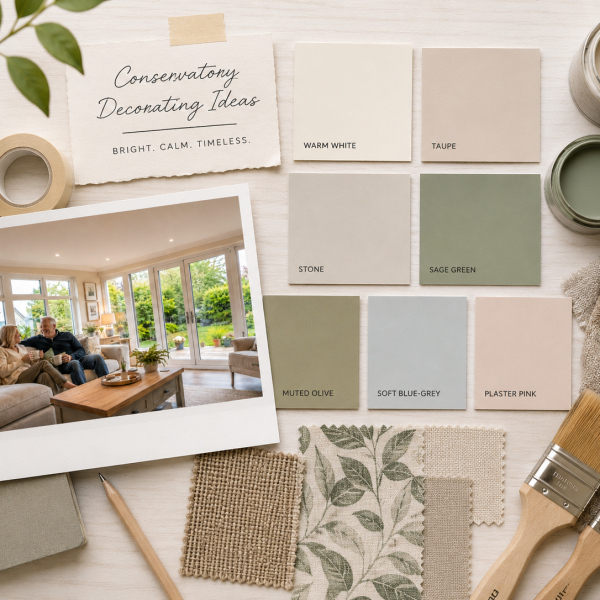
1 - Use a soft neutral base
A neutral colour scheme helps a conservatory feel bright and timeless.
Warm whites, soft stone, taupe, oatmeal and greige can create a calm backdrop that works with changing daylight throughout the year.
2 - Bring in garden-inspired colours
Because conservatories connect the house and garden, natural colours work especially well.
Consider:
- Sage green.
- Olive.
- Clay.
- Soft blue-grey.
- Warm terracotta.
- Stone.
- Mushroom.
- Cream.
- Muted botanical prints.
These tones help the room feel connected to the view outside.
3 - Add texture
Texture stops a conservatory feeling cold or flat.
Use:
- Woven rugs.
- Linen cushions.
- Wool throws.
- Rattan baskets.
- Timber tables.
- Soft upholstery.
- Ceramic lamps.
- Natural blinds.
- Indoor plants.
Texture is particularly useful if the room has lots of glass, tiles or hard surfaces.
4 - Create evening atmosphere
Many conservatories are designed around daytime light, but they can feel less inviting in the evening.
Add:
- Table lamps.
- Floor lamps.
- Warm bulbs.
- Candles or lanterns.
- Soft curtains or blinds.
- Layered textiles.
- A rug under the main seating area.
An upgraded internal roof with downlights can also help the room feel more integrated with the rest of the home.
5 - Use plants carefully
A modern layout and good furniture can improve your conservatory, but they cannot solve every issue.
If the room is too hot in summer, too cold in winter or noisy when it rains, the roof may be the main barrier to year-round use.
To make a conservatory usable all year round, think about:
- Roof performance.
- Insulation.
- Ventilation.
- Heating.
- Glare control.
- Flooring.
- Lighting.
- Furniture comfort.
- Storage.
- Layout and zoning.
A professional roof solution can make a major difference because it helps address the biggest comfort issues.
CI Group systems including SkyTherm®, ThermaTile® and the CHRIS® System are designed to help homeowners improve conservatory comfort, appearance and usability.
The result can be a room that feels warmer in winter, cooler in summer and more practical for everyday life.
How zoning and roof upgrades work together
Zoning helps you decide how the conservatory should work.
A roof upgrade helps make that use realistic.
For example, you may want your conservatory to become a home office. Zoning can help you position the desk, storage and lighting. But if the room overheats in summer or becomes cold in winter, the layout alone will not be enough.
You may want a dining space. Zoning can help you centre the table and create flow. But if the room is noisy in the rain or uncomfortable in colder months, you may still avoid using it.
This is why the best conservatory transformations often combine design improvements with performance improvements.
Good design answers: How should the room look and function?
A professional roof upgrade answers: How can the room feel comfortable enough to use every day?
Before and after conservatory design: what changes?
A well-designed conservatory transformation can completely change how the room feels.
Before, the room may feel:
- Too hot in summer.
- Too cold in winter.
- Hard to furnish.
- Disconnected from the house.
- Cluttered.
- Noisy when it rains.
- Used only occasionally.
- Like an afterthought.
After thoughtful zoning, furniture planning and roof improvement, it can feel:
- Comfortable.
- Modern.
- Practical.
- Connected to the home.
- Clearly zoned.
- More stylish.
- More peaceful.
- Suitable for year-round use.
- Like a proper living space.
This is the real value of improving a conservatory. It is not just about making it look better. It is about helping the room work harder for the way you live.
Common conservatory design mistakes to avoid
When redesigning your conservatory, avoid these common mistakes.
1 - Choosing furniture before deciding the purpose
Start with how you want to use the room, then choose furniture to support that.
2 - Blocking the garden view
The garden view is often one of the best features of a conservatory. Keep sightlines open where possible.
3 - Overfilling the room
Too much furniture makes the space feel smaller and harder to use.
4 - Ignoring temperature problems
If the room is uncomfortable, interior design will only go so far. The roof may need upgrading.
5 - Forgetting storage
Even a small amount of storage can make the room feel calmer and more practical.
6 - Using only daytime lighting
Add lamps or integrated lighting so the conservatory feels inviting in the evening.
7 - Treating the conservatory as separate from the house
Use colours, materials and finishes that connect with adjoining rooms so the conservatory feels like part of the home.
Is a conservatory roof upgrade worth it for design?
Yes, especially if the existing roof is stopping the room from being used properly.
A roof upgrade can support the design by improving comfort and creating a more finished internal appearance. It can make the conservatory feel less like a bolt-on and more like a natural extension of the home.
A finished internal ceiling can also make furniture placement, lighting and zoning feel more successful. The room becomes easier to style because it feels more balanced and less dominated by the old roof structure.
For homeowners planning a conservatory makeover, the roof should be considered early. It affects not only temperature, but also light, sound, comfort and the overall feel of the space.
How CI Group can help
At CI Group, we help homeowners transform conservatories into spaces they can use more often and enjoy in every season.
Our professional conservatory roof systems include:
SkyTherm®
SkyTherm® is designed to improve comfort while creating a clean internal finish. It can help make your conservatory feel more like a proper living space, with a warmer feel in winter, a cooler feel in summer and reduced rain noise.
ThermaTile®
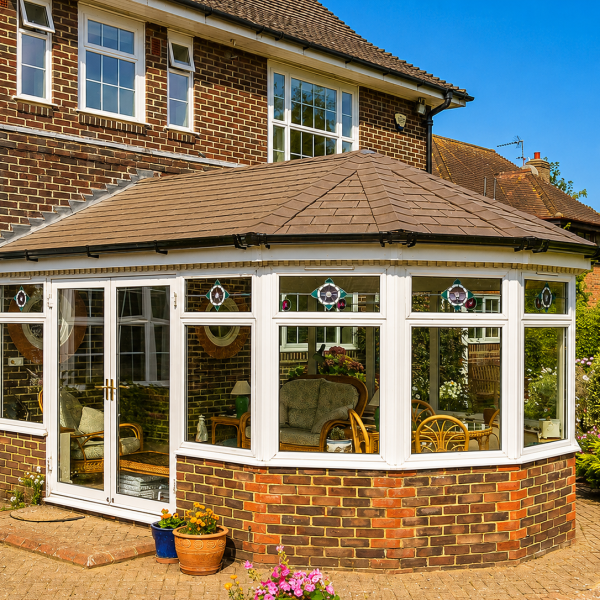
ThermaTile® is a tiled conservatory roof option for homeowners who want a more substantial, modern roof appearance. It can help the conservatory feel more connected to the rest of the property while improving usability.
The CHRIS® System
The CHRIS® System is designed to improve the performance of older conservatories and help homeowners create a space that works all year round.
Together, these systems help homeowners move beyond short-term fixes and create a conservatory that feels modern, comfortable and practical.
Final checklist: designing and zoning your conservatory
Before redesigning your conservatory, ask:
- What is the main purpose of the room?
- Do I need one zone or several?
- Where is the best garden view?
- Where should the main walkway be?
- What furniture will fit comfortably?
- Do I need lightweight conservatory furniture?
- How will I store everyday items?
- Will the room feel good in the evening?
- Does the colour scheme connect with the house?
- Is the roof helping or limiting the room?
- Can the conservatory be used all year round?
If the answer to the final question is no, the roof may be the best place to start.
Create a conservatory that works for modern living
A conservatory has the potential to become one of the most useful rooms in your home.
With clear zoning, the right furniture and a thoughtful design scheme, it can become a relaxed living space, dining room, home office, family snug or garden room.
But for the room to work properly, it needs to be comfortable too.
If your conservatory is too hot in summer, too cold in winter, noisy when it rains or difficult to use for much of the year, a professional roof upgrade could make the biggest difference.
At CI Group, we help homeowners create modern, comfortable conservatories with roof systems including SkyTherm®, ThermaTile® and the CHRIS® System.
Whether you want to redesign the room, improve the layout or transform it into a year-round living space, we can help you make more of the home you already have.
Book your free conservatory roof quote today and find out how CI Group can help you turn your conservatory into a modern, usable living space.
Book your free conservatory roof quote today and find out how CI Group can help you make more of your conservatory.